Choking: A Medical Emergency That Needs Immediate Action

CHOKING

choking

Choking is a sudden and potentially life-threatening emergency that occurs when a foreign object blocks the airway, preventing normal breathing. It can happen to anyone—children, adults, and the elderly—and often occurs unexpectedly during eating, playing, or even while talking. Prompt recognition and timely intervention can save lives.

What Is Choking?

Choking occurs when food, a small object, or fluid becomes lodged in the throat or trachea (windpipe), blocking the flow of air to the lungs. Without oxygen, the brain can begin to suffer damage within minutes, making choking a true medical emergency.

Common Causes of Choking

  • Food items: Nuts, grapes, meat, hard candies, popcorn
  • Foreign objects: Coins, toys, buttons, pen caps
  • Poor chewing: Eating too fast or without proper chewing
  • Alcohol or drugs: Reduced alertness and swallowing reflex
  • Medical conditions: Stroke, neurological disorders, reduced gag reflex
  • Dentures: Poorly fitted dentures increase choking risk
  • Children’s behavior: Putting objects in the mouth during play

Who Is at Higher Risk?

  • Infants and young children
  • Elderly individuals
  • Patients with neurological or swallowing disorders
  • Individuals with altered consciousness
  • Bedridden or critically ill patients

Signs and Symptoms of Choking

.Partial Airway Obstruction:

Coughing

Gagging

Wheezing sounds

Difficulty speaking

Shortness of breath

Complete Airway Obstruction:

Inability to speak or cry

Silent cough or inability to cough

Clutching the throat (universal choking sign)

Cyanosis (bluish lips or face)

Loss of consciousness if not relieved

First Aid Management of Choking

1. Assess the Situation

  1. Ask the person, “Are you choking?”
  2. If they can cough or speak, encourage coughing.
  3. Do not interfere if they are coughing effectively.

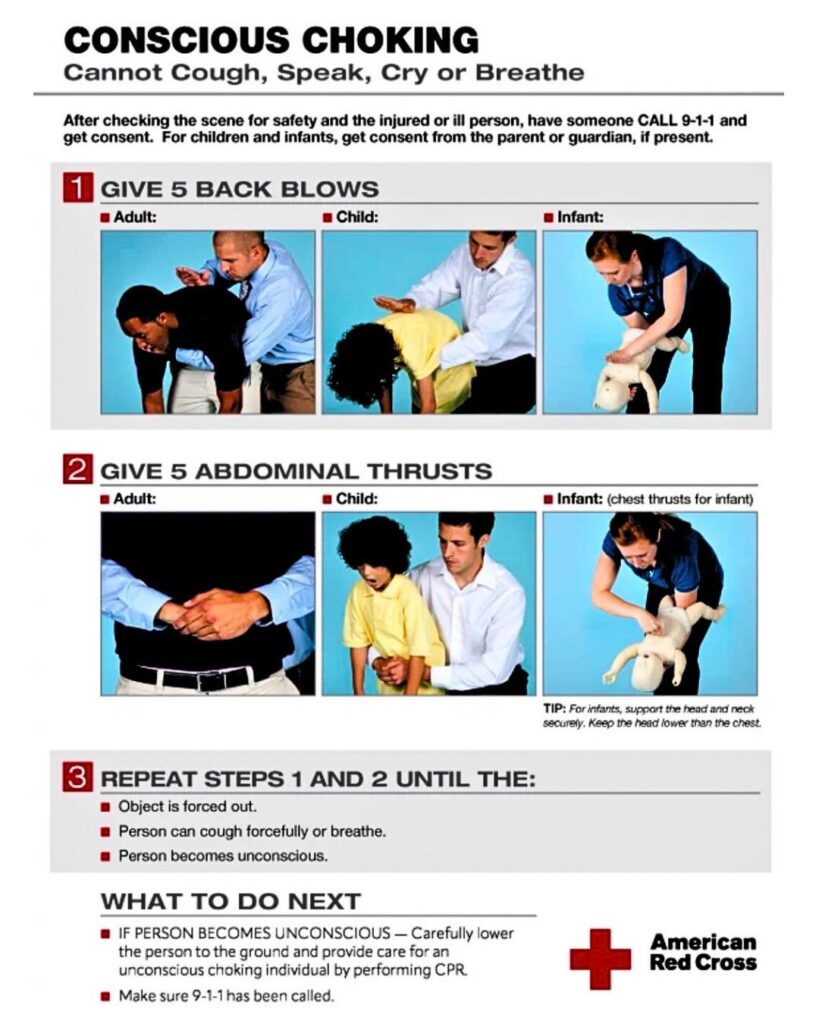
2. For Adults and Children (Above 1 Year)

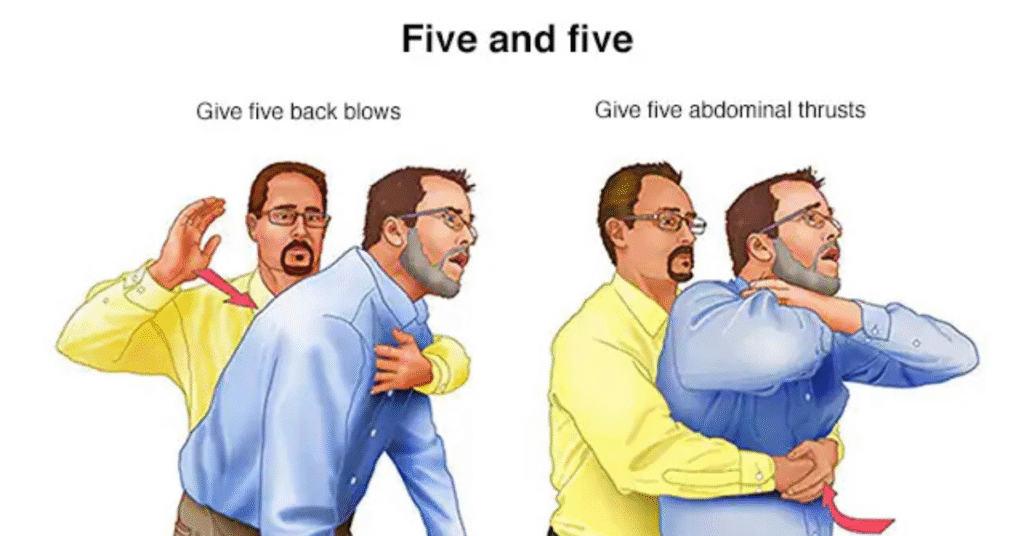
Heimlich Maneuver (Abdominal Thrusts):

  1. Stand behind the person.
  2. Wrap your arms around their waist.
  3. Make a fist and place it just above the navel.
  4. Grasp the fist with the other hand.
  5. Deliver quick, inward and upward thrusts.
  6. Repeat until the object is expelled or the person becomes unconscious.

3. For Infants (Below 1 Year)

  1. Place the infant face-down along your forearm.
  2. Give 5 back blows between the shoulder blades.
  3. Turn the infant face-up and give 5 chest thrusts.
  4. Repeat until the object is removed or help arrives.

4. If the Person Becomes Unconscious

  1. Call for emergency medical help immediately.
  2. Begin CPR.
  3. Check the mouth for visible obstruction before giving breaths.
  4. Do not perform blind finger sweeps.

Role of Healthcare Workers and Nurses

  • Educating patients and caregivers
  • Monitoring high-risk patients during feeding
  • Ensuring proper positioning while eating
  • Maintaining emergency preparedness
  • Training staff in Basic Life Support (BLS)

Prevention of Choking

  • Cut food into small pieces
  • Encourage slow eating and thorough chewing
  • Avoid talking or laughing while eating
  • Keep small objects away from children
  • Supervise infants and elderly during meals
  • Ensure proper fitting of dentures
  • Follow safe feeding practices in hospitals and home care


When to Seek Medical Help

  • Breathing difficulty persists
  • Chest pain or throat pain occurs
  • There is a history of aspiration
  • The person was unconscious during the episode

Conclusion

Choking is a sudden emergency that requires quick thinking and immediate action. Knowing how to recognize the signs and provide proper first aid can mean the difference between life and death. Public awareness, caregiver education, and regular training in first aid and BLS are essential steps toward preventing choking-related fatalities.

2 thoughts on “Choking: A Medical Emergency That Needs Immediate Action”

  1. Pingback: What will be Nursing Officers Expected Salary as per 8th Pay Commission 2026?

Leave a Comment

Your email address will not be published. Required fields are marked *

Scroll to Top